Courage
You can face a difficult situation without avoiding it.
« Take your place and choose how to use your strength. »
Seeks strength, autonomy and mastery of their environment.
Strength, autonomy, control.
Being hurt, controlled or appearing weak.
Courage
Anger and excessive confrontation.
Present, proactive, assertive
Anger · regaining control
No profile is better than another. These tendencies are coaching starting points to compare with your experience, not a label or a prediction of your level.
The Leader likes to feel able to influence the situation. You may defend your choices energetically, take responsibility and mobilise when a challenge appears. Autonomy matters: understanding what you decide and owning your intention helps you engage fully in action.
When you feel controlled, unfairly treated or vulnerable, that energy can become an immediate reaction. Showing doubt or asking for help may seem to expose weakness. Yet recognising what affects you can give you more choices in your response and make your strength more available for play.
You seek autonomy and control over your environment so you do not feel at its mercy. Protecting others or defending a position can give this strength meaning. Accepting help or slowing a reaction expands your options for action.
A setback can feel like an attempt to take away your agency. You may respond with more force even when the situation mainly needs a more precise decision.
Your capacity to commit can help you decide and remain present in a contest. You may energise a group, protect a partner and take initiative when the situation stalls. That presence becomes a resource when intensity serves a chosen intention.
The trap is treating every resistance as a challenge that requires a stronger response. A coach’s remark, a disputed call or an opponent slowing play can capture all your attention. Energy spent trying to control everything is then unavailable for choosing the best tactical response.
You can face a difficult situation without avoiding it.
You take a visible place in competition.
You can carry a decision and lead others.
You can stay engaged when the contest intensifies.
You can stand up for a framework and the people who matter.
Anger and excessive confrontation.
Anger can become an attempt to regain control immediately. Your stroke hardens, confrontation attracts attention and you want to respond harder. Use that rise as a cue to channel energy: a long exhale, relaxed hands and a tactical decision.
You stay powerful without being trapped by reaction. You can choose patience, listen to feedback and admit difficulty without losing presence. Your strength protects your playing plan instead of blowing it apart.
After a call you consider unfair, you may want to win the next point immediately to reassert your presence. That intention becomes costly if it makes you force an unsuitable ball. Returning to your target and positioning lets you apply your fighting spirit to the actual rally.
Choosing patience can also be a way to influence the match. You can accept a defensive phase, wait for a better ball and retain a strong presence. The useful question is not always how to hit harder, but where your energy will have the greatest effect.
You enjoy taking initiative and bringing a clear intention to the rally.
You can decide quickly and commit; take a moment to read the ball rather than react to the challenge.
Boldness can become escalation. Choose a generous target to make power useful.
The contest engages you, but your opponent does not need to become an enemy.
Intensity can support focus; a conflict can also absorb all your attention.
You may want to finish through force. Keep creating space before accelerating.
You may try to regain control immediately. First rebuild a playable point.
Channel intensity into footwork and the target, not a harsher swing.
Your experience, level and the situation shape these tendencies.
Notice the first sign of rising tension: a clenched hand, a rushed response or the urge to confront. Pair it with a brief reset, then a playing decision. The goal is to create room for choice between what affects you and what you do with it.
« I choose, I channel. »
« A decision, not an explosion. »
« My strength follows my intention. »
Do not make your tactical decision at the peak of anger.
Turn your attention to your playing area, relax your hands and exhale before choosing the target.
Use power in service of placement and point construction.
Direct communication and consistent boundaries make the coaching relationship clearer. The player can have real choices while remaining responsible for behaviour. Avoiding humiliation and power struggles lets you work on intensity without turning support into another confrontation.
Parents can accept anger as a feeling while maintaining boundaries around actions. Once calm returns, recognising a request for help or a contained reaction shows that self-control takes several forms. The player can learn to express vulnerability without losing their place.
Be direct, hold clear boundaries and offer a choice the player takes responsibility for.
Avoid power struggles, humiliation or making rules negotiable under anger.
“Keep your intensity. Now choose where to put it.”
Wait for calm, distinguish fighting spirit from escalation, then work on one concrete control cue.
Practise an exhale and a clear intention before each point.
Be direct, set clear boundaries and respect their autonomy.
« I choose, I channel. A decision, not an explosion. »
I use these reference points to open a conversation, then compare them with your experience without reducing you to a label.
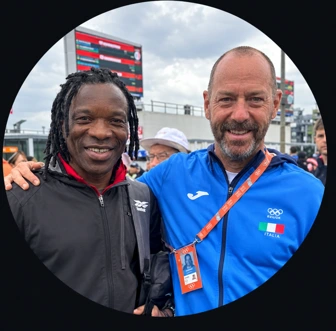
My coachingThese players are cited as illustrative examples in “Les 9 Visages du Champion”. This association helps explore the profile; it is not a definitive diagnosis of their personality.
A proposed reference for exploring power, presence and assertiveness in competition.
« Your power grows when you choose where to put it. »
A profile does not define everything you are. It helps you understand what motivates you, what holds you back and how you instinctively react in certain situations.
Reference points from the site and “Les 9 Visages du Champion”, expanded with practical coaching suggestions. Wording on this page is editorial guidance, not quotations attributed to champions.
Want to understand your profile more deeply and apply these ideas to your own game? Join my coaching. I start with your match experiences, challenges and goals to help you build practical reference points for training, competition and everyday life.
Start by telling me about your situation in the enquiry form. I will then take time to speak with you and suggest coaching that fits your needs.
The format and fee are agreed after our initial conversation.
This quiz is a self-reflection and coaching tool inspired by the Enneagram, not a psychological or medical diagnosis. The result is an orientation to support reflection and coaching. Identifying a profile also requires observing deeper motivations over time.